Case study · Automotive field service
12 May 2026
Bookings on autopilot, doubling the business in two months
He was personally slotting every job for a team of mobile car technicians into the diary by hand. Here's how one booking page took that off his plate and handed him back a quarter of his week.
One of my clients was typing every single booking into his calendar by hand. Every. Single. One.
He runs an automotive service. His techs head out to customers' homes and do the work right there on the driveway, and with around 20 new requests landing on the website every day, he'd quietly become the one thing the whole business depended on. If he wasn't at his desk assigning jobs, nothing moved. No days off. No growing past his own calendar. His evenings were gone.
The fix
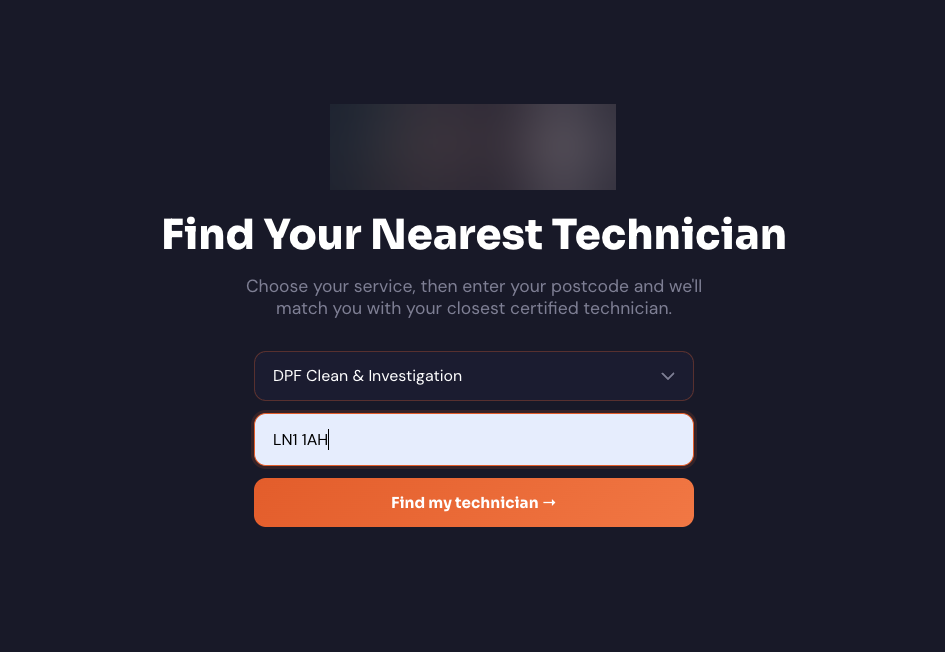
So I built him a booking page that does his job for him. The customer picks what they need, types in their postcode, and the system matches them to their nearest technician and books it straight in. No back and forth, no waiting on him to reply. And because it plugs into his CRM, the calendar now fills itself.
The clever bit
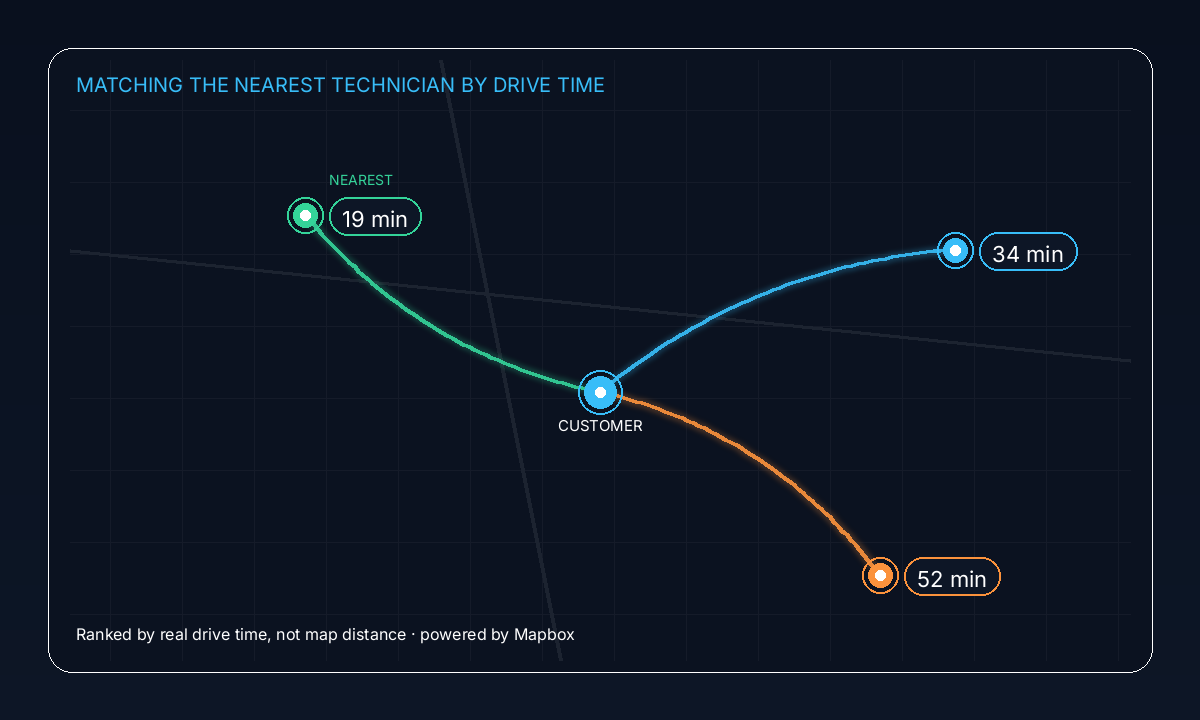
It doesn't just grab whoever looks closest on a map. It finds the nearest technician who's actually qualified for that job, then ranks them by real drive time, because forty minutes down a motorway often beats fifteen across town. All of that routing runs on Mapbox, so it costs him nothing.
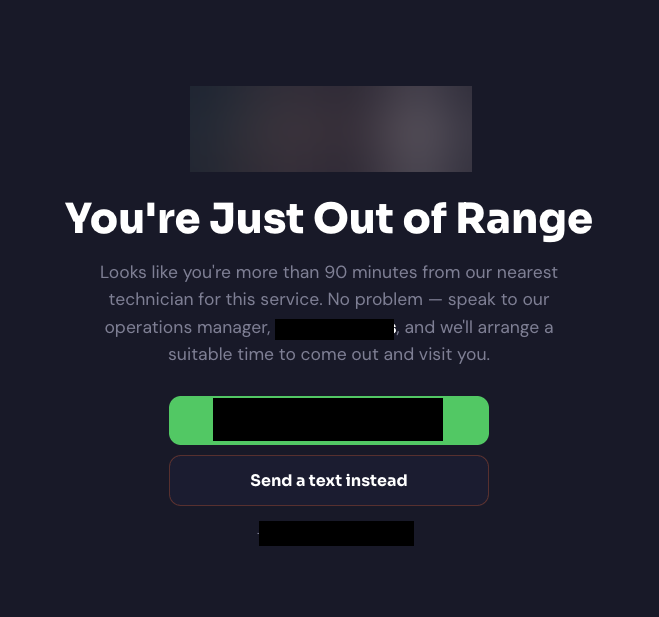
There's a safety net, too. If the closest available technician is still more than 90 minutes out, it won't quietly book someone a miserable job. It flags it to the ops manager and lets a human step in.
Then it runs itself
Once a job is in, the rest happens on its own. Reminders go out so people don't forget. Pre-visit info goes out so they know exactly what to expect. From the first click to the technician knocking on the door, nobody has to lift a finger, and nobody slips through the cracks.
The result
He got around 10 hours of his week back. That's a full quarter of it. And he isn't sitting on that time. He's pouring it into the marketing and sales that actually grow the business.
The bottleneck is gone, too. More leads used to mean more admin for one very tired man. Now more leads just mean more booked jobs. So we're doubling his ad spend, pushing from 20 a day towards 40 or 50, and going after double the business inside two months.
It also saved him the £200 a month he was about to spend on software, took me an hour to build, and costs nothing to run. But honestly, the time was the real prize.
He got his evenings back, and now we're focused on doubling the business in the next two months.
Where's the bottleneck in your business?
Book a free AI Blueprint call. We'll find the one thing holding you back and map out exactly what to automate first.
Get a free AI Blueprint